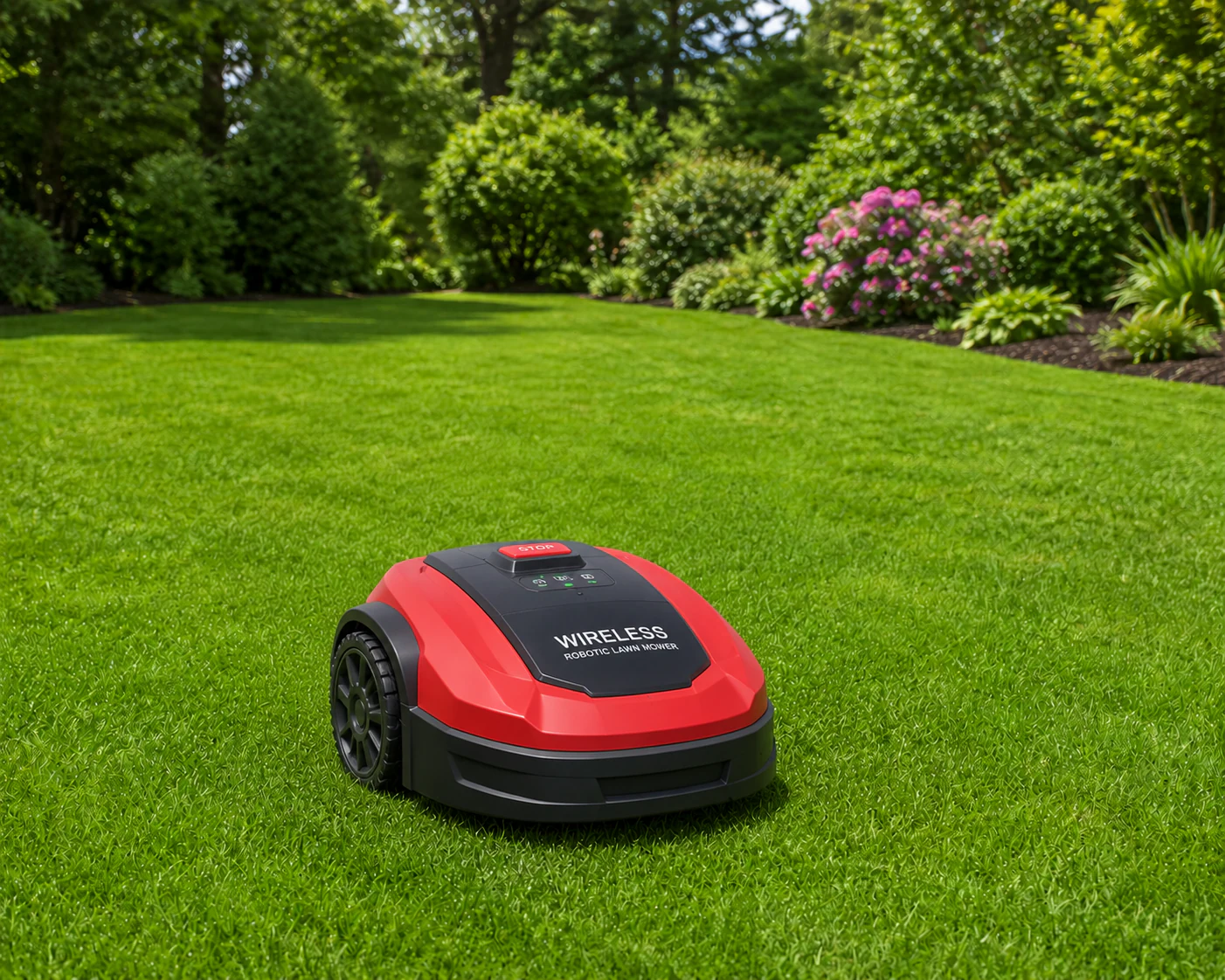
At a resort during my vacation last year, I watched a little robot lawnmower begin its shift each morning.
It emerged from some part of the hedge around 8 am everyday, rolled onto the lawn, and began tracing slow, methodical lines across the grass. It knew its perimeter and kept moving across from one part of the garden to another.
Morning to evening. The same field, the same moves, the same hum. Three days in a row, I watched it roam around with total consistency. No distraction. No visible frustration. No need for novelty. It simply did the work it had been designed to do.
Watching it with my morning cuppa in my hand was almost meditative, except meditating is hard for my monkey mind and so some uncomfortable thoughts kept coming. If my life ever resembled this lawnmower’s, I would likely describe that life with a single word: Boring!
But it's not just me, it's likely that most of you would call this boring.
Remember Groundhog Day? Do you want to be that person living the same day, each day? Why does the human mind resist repetition so strongly? Even when stability is exactly what allows good things to grow, we quickly begin craving stimulation, unpredictability, and change.
Many elite performers move in the opposite direction altogether, spending years trying to make their lives more repeatable, more controlled, and more routine? Maybe even boring.
That thought brought me back to something American rock climber Alex Honnold once said at an offsite I attended, which is also captured in his book Alone on the Wall. Honnold is the first person to free solo Yosemite's El Capitan—to scale the wall without rope or any protective gear.
People imagine free solo climbing as a giant adrenaline rush. Honnold described it very differently:
“There is no adrenaline rush. If I get an adrenaline rush, it means something has gone horribly wrong.”
That line stayed with me for years.
A man climbing thousand-foot rock faces without ropes was describing his ideal emotional state as calm. “The whole thing should be slow and controlled… it’s mellow,” he says.
Even during his recent ascent of Taipei 101 for Netflix’s Skyscraper Live, the preparation sounded almost procedural. He practiced sections repeatedly with ropes, reviewed footage of the route, visualized sequences at home, and trained for months - the preparation lasted months. The execution itself lasted only around 90 minutes.
To viewers, the event looked extreme. To Honnold, success depended on reducing uncertainty until the impossible began to feel routine.
Beginners seek excitement. Experts seek repeatability.
The same pattern appears almost everywhere. New investors crave action - they are excited by doing, by investing, by transacting. Experienced investors increasingly value patience - they wait and wait until the right opportunity comes by and they pounce like they were preparing for this one moment all their lives.
Young founders chase speed and constant movement. Veteran founders become obsessed with operational rhythm.
Amateur athletes seek intensity every session. Elite athletes build rituals around sleep, nutrition, pacing, recovery, hydration, and consistency.
Compounding only works when repetition survives long enough.
That is true in finance. It is equally true in life.
Muscle compounds through repeated training.
Writing compounds through repeated publishing.
Relationships compound through repeated presence.
Businesses compound through repeated execution.
Most meaningful outcomes are produced slowly through accumulated ordinary days. In those ordinary days, life appears boring. Progress takes time and it shows up with consistent repetition.
The summit, the IPO, the race day, those six-pack abs the world sees - they don't capture the endless execution/training sessions where nothing dramatic happened.
Compounding has a “positioning” problem. The early days rarely feel exciting. Results lag effort for a long time. The repetition feels disconnected from the reward. Human psychology struggles with this because our brains are wired to notice and seek spikes, surprises, and immediate feedback.
The nervous system adapts quickly to stability. What felt exciting six months ago soon becomes normal. The new job becomes routine, the same route to work becomes routine, the same weekend drive to take the kid to their music class becomes routine.
And so the search begins again.
That may be the most surprising insight from Honnold’s climbing. Outsiders imagine constant thrills. He describes long stretches of calm movement interrupted by a few consequential moments requiring absolute focus. The calm is what allows survival. The calm comes from planning, from practice, from visualization, from repetition.
Human beings often confuse stimulation and excitement with meaning. Excitement creates emotional spikes but repetition creates identity. Repetition creates depth. Repetition created excellence. The things we repeat eventually shape who we become.
A person who reads every day changes. A person who trains every day changes. A person who keeps showing up changes. Each of these compounds. Compounding is repetition observed over long periods of time.
That may ultimately be what Honnold understands better than most people. If climbing remained emotionally intense every minute, he would probably make mistakes. The goal is controlled attention. Calm execution. Familiarity under pressure.
Excellence often looks dramatic from far away and remarkably ordinary up close.
By the third day of watching that little lawnmower, I began seeing it differently. Initially, the repetition felt depressing, a mechanical version of Groundhog Day. Over time, the rhythm started to feel meditative. Movement, consistency, compounding.
Humans should never lose curiosity, ambition, exploration, or the desire for discovery. Restlessness has driven enormous progress across civilization. Still, modern life may have drifted too far toward constant stimulation and too far away from steady rhythms.
We increasingly expect life to feel exciting all the time. Most worthwhile things do not work that way. A good life may contain a few extraordinary moments. The foundation underneath is usually built from thousands of ordinary ones.
The real challenge is not finding excitement everywhere - it is staying present long enough for repetition to turn into compounding. Because in the end, most of life is not the summit. It is the patient climb.
Recommended Reads
Three articles I found interesting:
- This is a wonderful blog on money and happiness. I 100% agree with the takeaway - those who spend money on others report being happier than people who spend it solely on themselves. The same goes for experiences—the most memorable ones are often those we share with others.
- What does a life void of connection look like? Many of us might be already living it without realizing it. As outlined in this piece in The Guardian, technology's relentless focus on convenience and efficiency is gradually eroding the human experiences that give life meaning. By outsourcing decisions, relationships, and creativity to digital tools, we risk becoming more isolated and disconnected from both each other and the natural world.
- This BBC article challenges the idea of soulmates, arguing that great relationships are built, not found. The strongest relationships aren't built on fate or perfect chemistry, but on two people choosing each other and putting in the work over time. The takeaway: lasting love comes from commitment, growth, and the small things we do for each other every day.
If you have time for longer reads:
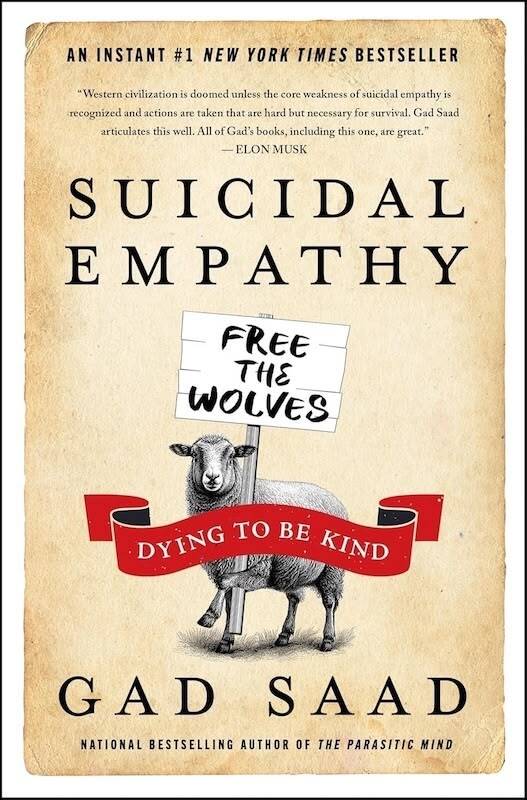
Suicidal Empathy: Dying to Be Kind by Gad Saad
I started reading this after Elon Musk recommended it on X. While I was hoping to read more about individual empathy, the book was much more about societies being empathetic and the ill effects of that over time. Some of the points are hard-hitting, but at times it can also come across as a rant.

Man's Search For Meaning: The Classic Tribute to Hope from the Holocaust by Viktor E Frankl
I’m reading this one again - one of my all time favourites. Through Frankl's experiences and insights, the book offers a timeless message of resilience, showing that while we cannot always control our circumstances, we can choose how we respond to them.
Do write in at gv@peakxv.com if any of my interests intersect with yours! I’m also on LinkedIn and Twitter.