
When the Lines Refuse to Be Straight: Reflections from the Savannah
ByGV Ravishankar
PublishedFebruary 24, 2026
We want reassurance that doing the right things will yield the right results. But nature offers no guarantees, only probabilities.
Ever since our first family trip to Kenya a few years ago, we have been hooked.
My vocabulary reset. I encountered actual zebra crossings and watched real monkey business unfold. My ruminations on herd behavior in startups and investing slowly gave way to learning about towers of giraffes and parliaments of owls. I also discovered that hippos are vegetarians, a fact I dutifully relayed to my trainer, who remains determined to get me to eat chicken for protein.
Humor aside, the safari has a way of rearranging mental models. Long stretches of waiting, watching, and not knowing what will happen next.
That uncertainty is the point.
A Probabilistic World
Every game drive begins without a promise. Our guides would often say, “Let’s see what nature holds for us today.” You might see nothing for hours, or you might encounter something that imprints itself permanently. The same terrain, the same animals, the same guides—and yet no two drives are alike.
Nature offers no guarantees. Only probabilities.
This runs counter to how we try to design our lives. We build plans and frameworks that suggest effort leads cleanly to outcomes. We want determinism. We want reassurance that doing the right things will reliably produce the right results.
The savannah refuses to indulge that belief.
Instead, it reveals a quieter truth: outcomes emerge from exposure and effort, not control. More days mean more drives. More drives mean more chances to be surprised. Exposure, not precision, does the heavy lifting.
Nature reinforces this idea relentlessly. Lions mate repeatedly, sometimes dozens of times in a short window, stacking odds rather than relying on a single attempt. Baby animals are born in numbers knowing that some will not survive. Brutal, but probabilistically sound. There is no illusion of efficiency here. Only effectiveness.
I started questioning how often we mistake elegance for progress, or restraint for wisdom, when the real driver of outcomes is simply allowing enough trials. Careers, relationships, ideas, and leadership trajectories compound because of sustained presence and effort.
Probability here operates within strict limits.
The Economics of the Savannah
Spending time on the savannah, you begin to notice a natural economics at play. The system operates on what might be described as “free for all, all for free.” No one owns the grass, the water, or the prey. Access is open. Competition is constant. And yet the ecosystem does not collapse under free riders or hoarding.
In the human world, free resources invite extraction without restraint. On the savannah, limits are enforced naturally. Energy, time, and vulnerability establish the boundaries. The absence of ownership does not imply the absence of discipline.
Every participant must earn survival daily. If you are fast, coordinated, or strong, you eat. If you are not, you adapt or you perish. The system works not by rationing resources, but by delivering immediate consequences. There are no subsidies and no bailouts. Incentives are tightly aligned with reality.
That discipline extends beyond survival, shaping how energy and attention are conserved.
Stillness, Sleep, and the Absence of Urgency
I was surprised by how well I slept.
Hyenas whooping nearby. Lions occasionally roaring in the distance. And yet my sleep was largely uninterrupted and, according to my Whoop, deeply restorative.
Something about being fully embedded in nature allowed the nervous system to stand down. There was no Wi-Fi, no calendar reminders, no ambient anxiety about unfinished tasks. I was blissfully ignorant.
The body seemed to remember an older rhythm, one that does not require constant vigilance. It’s no accident that forest bathing has become an increasingly popular practice.
As for the animals, they seemed perfectly content doing nothing for long stretches. Lions sprawled in the shade. Cheetahs lay motionless, conserving energy. There was no visible discomfort with stillness.
Watching them, I was reminded how uneasy humans become when nothing demands our attention. Left alone with our thoughts, we reach for stimulation, distraction, even mild discomfort. Anything but emptiness. Given the choice, many of us would rather administer ourselves a small shock than sit quietly in an empty room, as some research experiments have demonstrated.
For animals, stillness is not boredom. It is strategy.
Patience, Resource Allocation, and Knowing When to Walk Away
We saw this strategy at play on one of our game drives. We watched a cheetah stalk a group of gazelles. It waited. And waited. Muscles coiled, eyes fixed, barely moving. After hours of watching, no attack materialized.
The patience was striking. There was no rush, no panic. The cheetah allowed conditions to evolve and moved only when the chances improved. In a world obsessed with speed, this felt almost subversive.
As sunset approached, the cheetah walked away. The probability of success was dropping. Even if it caught the gazelle, the odds of losing it to scavengers were rising. So it conserved its energy. A calculated move.
This was a lesson in resource allocation, played out in real time. Not every opportunity deserves commitment. Not every sunk cost demands persistence. Sometimes the most rational choice is restraint.
Watching the cheetah stalking was recounted as one of the best moments by the group we traveled with. The anticipation itself became the highlight, even though the attack never came. The possibility carried its own energy. It struck me how much of human experience unfolds in the mind rather than in events themselves.
Happiness Needs Work
By the end of the trip, we felt complete.
We had seen the Big Five, including the elusive leopard, a species notoriously difficult to spot. We had watched a cheetah on the prowl, spent time watching lions, elephants, rhinos, and giraffes, and experienced enough stillness to feel genuinely restored. It felt rich. Satiating. Whole.
On our final evening, the camp encouraged us to write a note in the guest book.
Before writing ours, we read a few entries from the group that had stayed just before us. They had seen lions chasing prey. They had witnessed a cheetah moments after a successful kill.
Reading those entries subtly shifted the frame. Comparison crept in. The experience had not changed, but its emotional value had.
Happiness, it turns out, is relative and ephemeral.
What the Savannah Leaves Behind
The savannah did not teach me how to be more certain or how to be happy.
It reminded me to embrace uncertainty. To increase exposure rather than demand guarantees. To conserve energy when the odds are poor. To stay present without filling every silence.
And perhaps most importantly, it reminded me how easily fulfillment dissolves once we begin measuring our experiences against someone else’s.
Nature connects the dots. You only have to stop trying to straighten the lines.
Recommended Reads
Three articles I found interesting:
- By discovering how cancer cells weaken immune cells (by stealing healthy mitochondria), scientists have uncovered a specific vulnerability, according to this Nature article. If researchers can block this mitochondrial theft, they may be able to restore immune strength and improve cancer treatments, especially immunotherapies.
- Development has its costs: Mumbai’s new eight-lane coastal motorway cuts travel time for sure, but it mainly benefits private car owners while most residents still rely on crowded public transport, argues this article. It disrupts fishing livelihoods, harms coastal ecosystems, and reflects unequal development priorities per the author. This article has created heated whatsapp discussions amongst Mumbaikars!
- This is a founder’s reflection on the mistakes in his journey: You can learn a few things from this blog and benefit from not repeating some of these mistakes. As a board member of Rebel Foods, I have seen how Jaydeep’s ability to reflect and adapt has allowed the company to keep compounding on its way to becoming a leader and a category creator. It’s also classic Jaydeep that he takes it all on himself when this is a collective set of mistakes.
If you have time for longer reads:
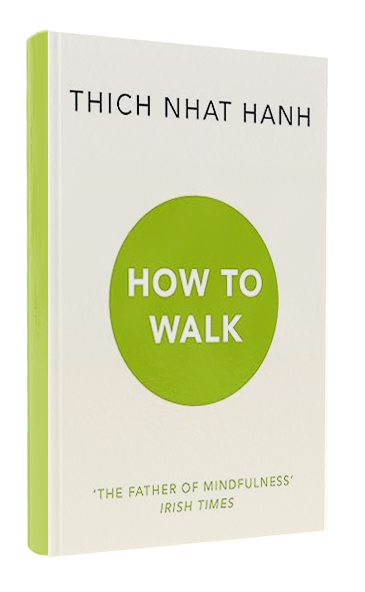
How to Walk by Thich Nhat Hanh
This book was a gift from my sister-in-law. This tiny, insights-packed book is a good reminder to be in the moment and remember to feel the ground that we walk on, instead of purely focusing on the destination the path takes us to.
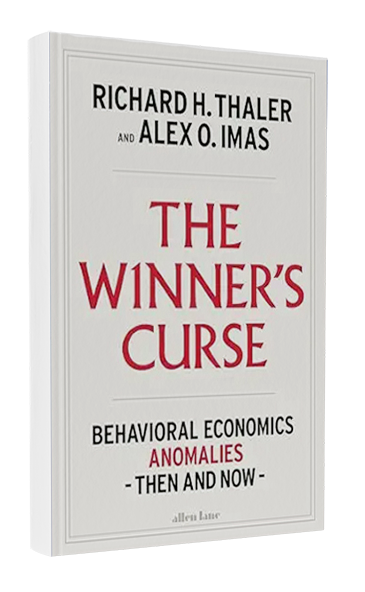
The Winner’s Curse: Behavioral Economics Anomalies Then and Now by Richard H. Thaler, Alex O. Imas
Revisiting Nobel Laureate Richard Thaler’s seminal 1992 work, this collaboration with Alex Imas examines how human irrationality consistently defies traditional economic models. This is a collection of essays on different biases and anomalies observed in the real world, and it is less like the Dan Ariely-type books, which are easier reads. Thaler is a legend in the domain, and his work is definitely worth following.
Do write in at gv@peakxv.com if my interests intersect with yours! Click here to read more articles on Peak XV’s blog. For more editions of Connecting the Dots, click here. I’m also on LinkedIn and Twitter.