
From Idea to IPO: The Invisible Forces Behind the Wakefit Dream
Sakshi Chopra
Published December 15, 2025

When I first came across Wakefit in early 2018, I was immediately struck by the ambition behind a young company reimagining a category that had barely changed in decades. Here was a team building an online-first mattress brand in a category that had always been offline, yet carrying a quiet confidence about what the future of the category entailed. The business was at a few crores in revenue per month, but the founders believed that if they removed layers of distribution inefficiency, owned the product and went directly to the consumer, they could offer exceptional quality and convenience at a price that felt fair to a young Indian professional renting their first home in a new city.
That combination of customer insight, ambition and frugality is what drew me in. It still does.
Two Founders, Many Failed Starts and an Unexpected Partnership
Our business can sometimes be quite serendipitous. Ankit and Chaitanya first met each other at a Peak XV portfolio company, after both had shut down their respective startups. Till date, they often joke that Ankit lost all his money in one startup while Chaitanya took a little longer and lost it across two.
After many nights of jamming on new ideas, they stumbled onto the idea of building a direct-to-consumer mattress brand when they discovered the disconnect between the raw material prices and the prices paid by the end customer. This idea saw the convergence of Ankit’s product and manufacturing background with Chaitanya’s expertise in brand and marketing.
The first seeds of Wakefit were sown in 2015 with big dreams but modest resources. They remained bootstrapped for the first three years as they were perfecting the product and go-to-market strategy. When they finally started meeting investors, the feedback was not what they expected. “You are building in a small TAM!”, “Who will buy mattresses online?”
Chaitanya once told me that Peak XV was the forty-third investor he had met!
Trust, Earned Slowly and Deliberately
Long before any capital entered the picture, customers trusted Wakefit. That trust was built deliberately.
Early on, the founders introduced a 100-day trial policy, an unheard-of concept in Indian ecommerce. It felt risky. But it worked. Conversions surged. Customers saw it as a signal of confidence and quality. More innovations followed – first to introduce roll-packed mattresses, expanded warranty to 10 and 15 years, which also speaks of the quality of product engineering.
The trust deepened through verified reviews. Over a million to date. And more unusually, through the founders themselves calling customers after delivery to check how they were sleeping. Over time, organic advocacy through apartment groups and alumni networks became one of their strongest growth engines.
Choosing the More Disciplined Path
While many consumer brands stay asset-light, Wakefit committed to being full-stack. They leaned into R&D, manufacturing, quality control, logistics and warehousing because they believed long-term innovation and cost control depended on it.
Shipping a mattress directly to someone’s home is complex. Every step matters. But they made the economics work through tight design and execution.
Inside the company, a culture took shape. Titles meant little. Depth and ownership mattered. Young operators and second-time founders thrived. Frugality became a core value. Capital was meant for factories, salaries, and long-term value, not extravagance.
Their Entrepreneur-in-Residence (EIR) program trained cohorts of future builders through real operational rigor. Many left along the way to start up. Some stayed on and became leaders in the company.
My favorite image from their early years is their facility on a third floor in a dusty industrial area on the outskirts of Bangalore, where the mattresses were lowered by a pulley every evening because they could not afford ground-floor space. Today, they run five of India’s largest facilities in the category. The contrast is poetic.
Expanding the Vision: From Mattresses to Home
By the end of 2018, Wakefit had earned the right to expand. Accessories came first. Wakefit brought in fitted bedsheets and mattress protector categories to India, thus expanding to cover the complete sleep solutions space. Then came furniture. The timing for furniture could not have been tougher, because the pandemic hit soon after. But Wakefit kept its operations running and met the needs of a nation suddenly living, working, and studying from home.
With the addition of accessories and furniture, Wakefit evolved into a complete home solutions company. That was when the company also decided to venture into offline retail in 2022. Over the years, Wakefit has transformed into a strong omni-channel company, operating where the customer segment wants them to operate.
It became an inflection point for growth and also one of the toughest phases in the company’s history.
A Near-Death Moment and the Discipline That Followed
In 2022/23, Wakefit faced a difficult period. At one point, only a month of payroll remained. The founders prepared contingency plans to cut their own salaries to zero and halve leadership pay. Their business, built on factories and stores, could not pivot overnight. The fundraising environment was bleak.
Existing investors stepped in with a backstop. Weeks later, the company closed its fourth round of investment and course-corrected. Wakefit has stayed profitable and cash generative since then.
Equally meaningful is how they shared value with their key stakeholders – Wakefit employees. Over the years, three ESOP liquidity events have benefited team members across factories, stores, and customer support. Many began as hourly workers, rose through the ranks and created wealth. That, to me, is the true heart of Wakefit.
A Partnership Powered by Two Very Different Founders
Ankit and Chaitanya could not be more different. One is fast-paced and outcome-first. The other is patient and process-driven. One begins with trust. The other expects people to earn it. One shoots and adjusts. The other aims carefully before shooting. Yet both place Wakefit above all else. That shared anchor is what has carried them so beautifully through every phase of scale.
The Next Leap: Jumbo Stores and the Offline ‘Pinterest’ Vision
Wakefit’s next chapter is bold. Chaitanya has told me that their jumbo stores represent a belief that Indian consumers today are well-traveled. They scroll through global design trends on Instagram and Pinterest. They no longer want to wait years for those ideas to reach India. Wakefit has built an in-house design team of over 50 people to translate global trends into products that fit Indian tastes, homes and price points. To display all of that in one immersive experience, you need space, scale, and operational depth. That is what these jumbo stores are designed to provide.
A Journey That Grew Alongside My Son
Wakefit will always be personal for me. I met the company when I had just conceived, and closed the investment around the time my son was born. In many ways, the investment has grown alongside my child. It was my first lead investment as a Principal at Peak XV, and one I felt deeply anchored to from the start.
A Milestone, Not a Finish Line
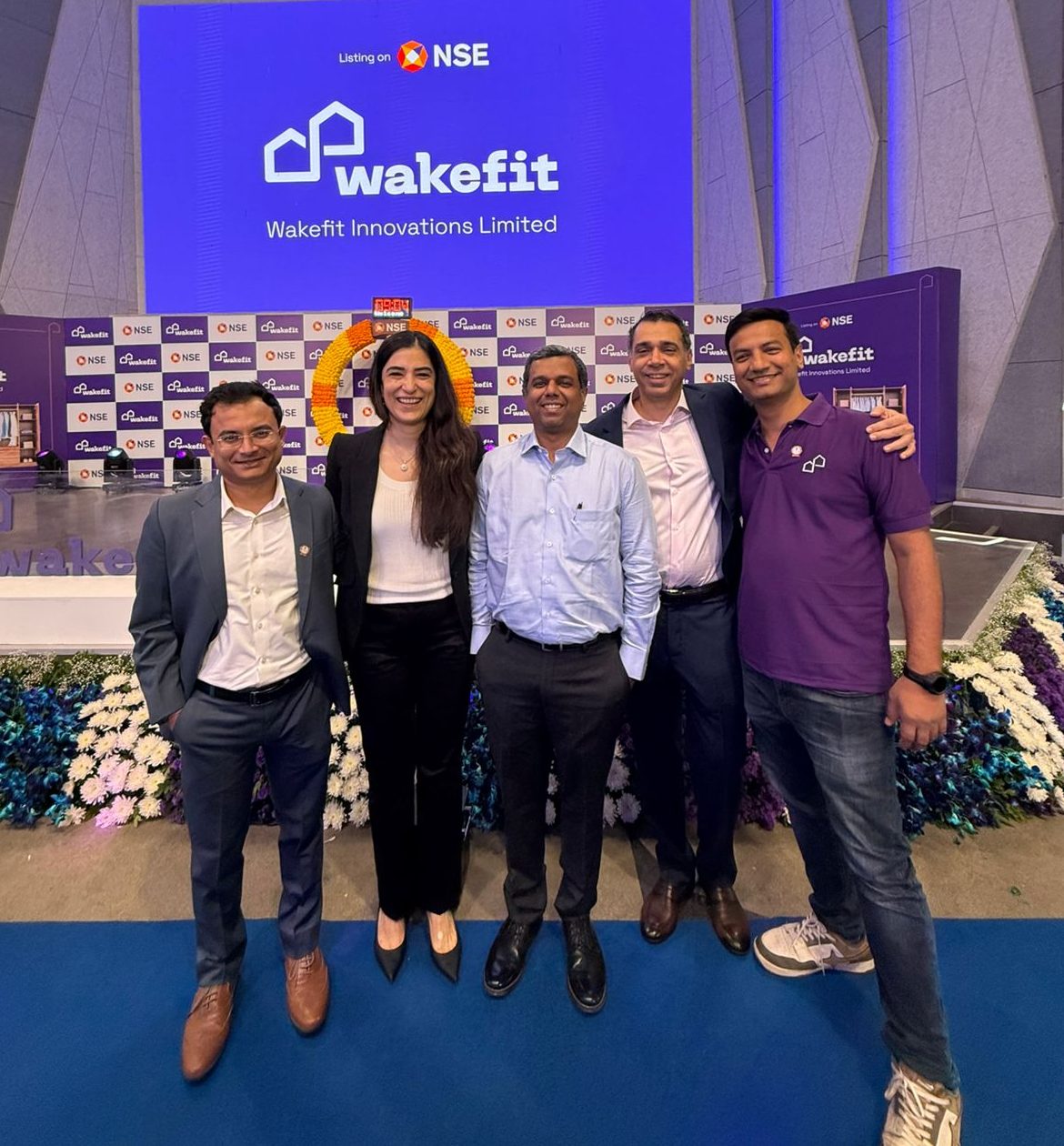
As Wakefit enters the public markets, it does so with scale, profitability, and a clear roadmap. Yet this milestone does not feel like an ending. It feels like the start of a new chapter for a company that has always chosen the more disciplined path and built with long term conviction.
For us at Peak XV, this moment reaffirms a belief that Indian consumer brands can be full-stack, frugal, digital-first and boldly innovative.
It has been a privilege to be part of this journey.
I am excited for everything this remarkable team will build in the years ahead.
Disclaimer: This content is for informational purposes only and does not constitute an offer to sell or a solicitation of an offer to buy any securities or interests in any fund managed by Peak XV Partners (“Peak XV”). Any such offer or solicitation will be made only by means of a confidential private placement memorandum and other offering documents. Past performance is not indicative of future results. The performance described herein refers to specific events and market conditions that may not be repeated. No representation is being made that any investor will or is likely to achieve profits or losses similar to those shown.